A Nile cruise between Luxor and Aswan is one of the most distinctive ways to experience Egypt. Instead of moving from one hotel to another while traveling between historical sites, travelers can stay on board a floating hotel and watch the landscape change around them.
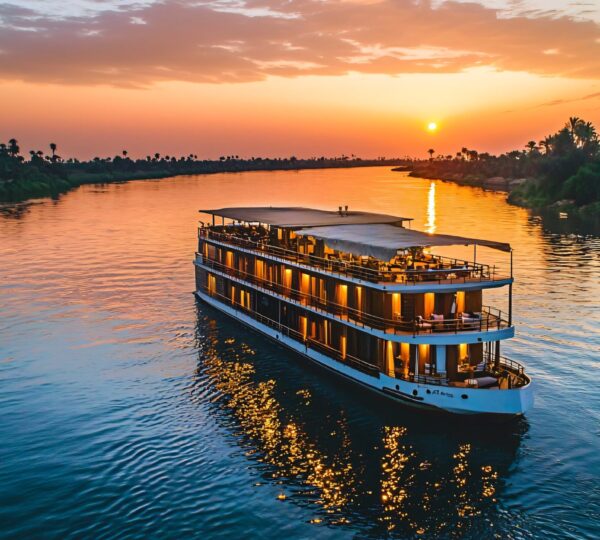
The experience combines ancient temples, river scenery, local life, comfortable accommodation, organized sightseeing, and quiet moments on the water. One day may begin with a visit to an ancient temple, while the afternoon is spent relaxing on the sun deck as the ship continues along the Nile. In the evening, travelers can enjoy dinner while watching the sunset over the river.
For many visitors, this combination is what makes a Nile cruise different from a conventional Egypt tour.
The route between Luxor and Aswan is especially interesting because it connects some of Upper Egypt’s best-known historical sites. Depending on the itinerary, travelers may visit Karnak Temple, Luxor Temple, the Valley of the Kings, Edfu Temple, Kom Ombo Temple, Philae Temple, and other important attractions.
At the same time, a Nile cruise is not simply a sightseeing trip. It is also a hotel experience, a transportation experience, and a slower way to discover the landscapes surrounding the river.
This guide explains what travelers can expect from a Nile cruise, including cabins, daily routines, food, scenery, temples, sunrises, sunsets, practical preparation, advantages, possible disadvantages, and tips for planning the journey.
Why Choose a Nile Cruise?
The Nile has shaped Egyptian civilization for thousands of years.
Much of Egypt is covered by desert, while fertile agricultural land follows the river. Traveling by boat makes this contrast especially easy to see.
From the deck of a cruise ship, travelers can watch green fields, palm trees, villages, small boats, and riverbanks gradually give way to dry desert landscapes.
At the same time, the route connects several major historical destinations.
This means travelers can combine sightseeing and relaxation without changing hotels every night.
A typical day may involve an early breakfast, a guided temple visit, a return to the ship, lunch, several hours of sailing, and free time on board.
That rhythm makes the journey different from a busy road-based tour.
The Route Between Luxor and Aswan
The exact itinerary varies between cruise companies and departure dates. However, the classic journey between Luxor and Aswan usually includes several important stops.
Luxor
Luxor is one of the main historical centers of ancient Egypt.
The modern city stands near the site of ancient Thebes, which played an important role in Egyptian history.
Luxor is often divided into two main sightseeing areas: the East Bank and the West Bank.
The East Bank is home to major monuments such as Karnak Temple and Luxor Temple.
The West Bank contains famous archaeological sites, including the Valley of the Kings and the Temple of Hatshepsut.
Because Luxor contains so many important monuments, it is often worth allowing enough time for sightseeing before or after the cruise.
Edfu
Edfu is famous for the Temple of Horus.
The temple is one of the best-preserved ancient Egyptian temples and provides visitors with a detailed look at traditional temple architecture.
Large walls, columns, inscriptions, reliefs, and monumental entrances make the site particularly impressive.
A visit to Edfu usually forms part of an organized excursion from the ship.
Kom Ombo
Kom Ombo offers another fascinating stop along the Nile.
The temple is unusual because it was associated with two deities, including Sobek, the crocodile god, and Horus the Elder.
Its location beside the river also creates a memorable setting.
After visiting the temple, travelers can return to the ship and continue the journey.
Aswan
Aswan is usually the southern endpoint of the classic Luxor–Aswan cruise.
The city has a distinctive landscape with islands, granite rocks, palm trees, and broad views of the Nile.
Depending on the itinerary, travelers may visit Philae Temple, take a traditional felucca ride, or explore other attractions in and around the city.
Aswan can also be used as the starting point for extending an Egypt itinerary toward other destinations.
What Are Nile Cruise Cabins Like?
Your cabin becomes your hotel room throughout the journey.
Although the exact design depends on the ship and cabin category, most cabins include a bed, private bathroom, storage space, air conditioning, and a window.
Some ships also offer cabins with larger windows, balconies, or French balconies.
The most important thing to remember is that ships differ.
Two cruise packages may have similar descriptions but provide different cabin sizes, facilities, locations, and services.
For this reason, travelers should read the cabin description carefully before booking.
Choosing the Right Cabin
Cabin location can influence the experience.
Travelers who are sensitive to noise may prefer a cabin away from busy public areas, staircases, restaurants, entertainment spaces, or mechanical areas.
A higher deck may provide a different view, while a lower cabin may sometimes be quieter depending on the ship’s layout.
There is no single cabin location that is perfect for everyone.
Instead, think about what matters most to you.
If you plan to spend most of your time on the sun deck, for example, a standard cabin may be perfectly adequate.
If you enjoy watching the river from your own room, a cabin with a better view may be more important.
What Is a Typical Day on a Nile Cruise Like?
A Nile cruise combines scheduled activities with periods of free time.
The exact timetable varies, but travelers can generally expect a rhythm similar to this:
Early morning: Breakfast and possibly a guided excursion.
Morning: Temple or archaeological site visit.
Late morning or midday: Return to the ship or continue sightseeing.
Lunch: Meal on board.
Afternoon: Sailing, relaxation, photography, or free time.
Late afternoon: More sightseeing or time on the deck.
Evening: Dinner, entertainment, relaxation, or another organized activity.
The schedule can change according to the sailing route and sightseeing arrangements.
Some excursions begin early because the temperatures are more comfortable in the morning.
This means travelers should be prepared for days that start earlier than they might during a beach holiday.
Why the Sailing Time Matters
It can be tempting to think of the time spent sailing as time when nothing happens.
In reality, the journey itself is one of the main attractions.
While the ship moves along the Nile, the landscape slowly changes.
You may see agricultural fields, palm trees, small villages, fishermen, boats, animals, and desert landscapes.
There is no need to rush from one attraction to another.
Instead, the river becomes part of the sightseeing experience.
This slower rhythm can be especially enjoyable after a morning spent exploring temples.
The Scenery Along the Nile
One of the greatest pleasures of a Nile cruise is simply watching the landscape.
The Nile creates a narrow corridor of fertile land through a largely desert environment.
From the ship, this contrast becomes particularly clear.
One moment you may see green fields and palm trees.
A short distance away, the landscape becomes dry and rocky.
This combination of water, vegetation, agriculture, villages, and desert creates a distinctive Egyptian panorama.
Villages Along the River
The Nile is still closely connected to everyday life.
During the cruise, travelers may see small settlements, agricultural areas, boats, and people working near the river.
These scenes provide a different perspective from the major archaeological sites.
Instead of seeing Egypt only through its monuments, travelers can observe a small part of modern life along the river.
Photography can be rewarding here, but visitors should remain respectful.
Avoid photographing people closely without permission, particularly when they are clearly the main subject of the image.
Agriculture and the Nile
The contrast between the desert and cultivated land is one of the easiest ways to understand the importance of the Nile.
Fields along the river support agriculture and create a landscape that looks dramatically different from the surrounding desert.
For visitors arriving from a Red Sea resort such as Hurghada, the change can be striking.
Hurghada is associated with beaches, coral reefs, and the sea. Along the Nile, the landscape is shaped by freshwater, farming, villages, and ancient monuments.
Temples Along the Nile Cruise Route
The historical sites are one of the main reasons travelers choose a Nile cruise.
Each temple offers something different.
Karnak Temple
Karnak is one of Luxor’s most famous historical sites.
It is not simply a single building but a large temple complex that developed over many generations.
Visitors can see enormous columns, courtyards, pylons, statues, reliefs, and inscriptions.
The Great Hypostyle Hall is particularly impressive because of its huge forest of columns.
A guide can help explain the religious and historical meaning behind the different areas.
Without context, the size of Karnak can be overwhelming.
With some background information, the details become easier to understand.
Luxor Temple
Luxor Temple is located closer to the modern city.
The complex has a strong connection with the religious life of ancient Thebes.
Its architecture includes monumental entrances, columns, statues, and reliefs.
Visiting Luxor Temple after seeing Karnak can help travelers notice similarities and differences in ancient Egyptian architecture.
Temple of Horus at Edfu
Edfu provides an excellent opportunity to study a relatively well-preserved temple.
The monumental entrance immediately creates a strong impression.
Inside, travelers can examine reliefs and inscriptions that provide information about ancient religious traditions.
The temple is also a useful reminder that ancient Egypt was not limited to the pyramids around Cairo.
Upper Egypt contains an enormous amount of architectural heritage.
Kom Ombo Temple
Kom Ombo has a distinctive design because the complex was associated with two religious traditions.
The temple’s location beside the Nile adds to its appeal.
Many travelers enjoy arriving at the site, exploring the ruins, and then returning to the ship as the river journey continues.
Philae Temple
Near Aswan, Philae offers another memorable historical experience.
The temple complex is associated with the goddess Isis and is located on an island.
Reaching the site by boat makes the visit different from many other temple excursions.
The combination of water, island landscape, and ancient architecture makes Philae particularly attractive for photographers.
Sunrise on the Nile
A sunrise over the Nile can be one of the quietest moments of the journey.
Early in the morning, the river may appear calm while the first light gradually reaches the surrounding landscape.
Palm trees, boats, fields, and distant desert areas can appear as silhouettes.
You do not need professional photography equipment to enjoy the moment.
A smartphone is enough to capture the changing light.
If you want better photographs, prepare your equipment the evening before and keep your camera easily accessible.
Most importantly, take time to watch the sunrise rather than viewing everything through a screen.
Sunset on the Nile
Sunset creates a completely different atmosphere.
As the sun moves lower, the colors of the landscape become warmer.
The river reflects the changing light, while palms, boats, villages, and distant desert areas can form silhouettes.
For many travelers, sunset is the perfect time to relax on the upper deck.
After a day of archaeological visits, there is something satisfying about watching the scenery pass quietly while the day comes to an end.
A Nile cruise is not only about seeing monuments.
It is also about experiencing the river at different times of the day.
Food on a Nile Cruise
Food is another important part of the experience.
Many Nile cruises include several meals, often with breakfast, lunch, and dinner served on board.
The exact menu and meal arrangements depend on the ship and package.
Meals may combine international dishes with Egyptian-style food.
Travelers may encounter rice, vegetables, salads, bread, legumes, grilled meat, chicken, pasta, soups, and other dishes.
Trying local food can add another dimension to the journey.
What About Special Diets?
Travelers with food allergies or dietary restrictions should communicate their needs before departure.
Do not assume that every dish will automatically meet your requirements.
Vegetarian travelers should also ask what options are available.
If you have a serious allergy, explaining it clearly to the cruise operator before the journey is particularly important.
Drinks
The treatment of drinks varies between cruise packages.
Some may include selected drinks with meals, while others charge separately.
Check the booking conditions carefully so that you know what is included.
It is also useful to carry water during excursions, especially in warm weather.
What Should You Pack for a Nile Cruise?
Packing for a Nile cruise is relatively simple, but a few items can make a major difference.
Consider taking:
- Comfortable walking shoes
- Lightweight clothing
- Sun hat or cap
- Sunglasses
- Sunscreen
- Reusable water bottle
- Camera or smartphone
- Power bank
- Personal medication
- Small backpack for excursions
- Light jacket or sweater
- Swimwear if the ship has a pool
- Comfortable evening clothing
The most important item is probably comfortable footwear.
Temple visits often involve walking over uneven surfaces, and sightseeing can last several hours.
Clothing for Temple Visits
Egypt has a warm climate, but travelers should also consider local cultural expectations.
Light and breathable clothing is practical during hot weather.
When visiting temples, mosques, churches, or other cultural sites, respectful clothing is a sensible choice.
A lightweight scarf can also be useful in certain situations.
Sun Protection During a Nile Cruise
The Egyptian sun can be strong, especially during outdoor sightseeing.
Do not wait until you feel hot before protecting yourself.
Use sunscreen regularly and wear sunglasses and a hat.
Drink water throughout the day.
During temple visits, look for shaded areas whenever possible.
The strongest heat can make a long sightseeing day feel much more demanding, so preparation matters.
Seasickness and Motion on the Nile
Some travelers worry about motion sickness before booking a river cruise.
The Nile is different from an ocean cruise, and the experience is generally much more closely connected to a river environment.
Nevertheless, people react differently to movement.
If you are sensitive to motion, consider discussing suitable precautions with a healthcare professional before traveling.
Keeping your cabin well ventilated and spending time in areas where movement feels comfortable may also help.
Nile Cruise Pros
A Nile cruise offers several practical and experiential advantages.
1. You Stay in One Accommodation
Instead of packing and unpacking for every destination, your cabin remains your base.
This can make a multi-destination historical journey much easier.
2. The River Becomes Part of the Trip
The journey between attractions is not simply transportation.
You can watch the landscape while relaxing.
3. Several Historical Sites Can Be Combined
Luxor, Edfu, Kom Ombo, and Aswan can be connected within one organized itinerary.
This makes the cruise attractive to travelers who want to see several major sites.
4. A Balance Between Activity and Relaxation
The schedule includes sightseeing, but there are also periods when you can sit on the deck, read, take photographs, or simply enjoy the river.
5. Less Daily Travel Planning
Transportation between many destinations is built into the cruise itinerary.
For travelers who prefer an organized holiday, this can reduce logistical stress.
6. Great Photography Opportunities
The combination of temples, river landscapes, villages, desert, sunrise, and sunset creates a wide range of photographic subjects.
Nile Cruise Cons
A Nile cruise also has some limitations.
1. The Schedule Can Be Fixed
Organized cruises usually operate according to a timetable.
If you prefer complete freedom, you may find scheduled excursions restrictive.
2. Some Days Start Early
Historical sightseeing often begins in the morning.
Travelers who enjoy sleeping late should be prepared for a different routine.
3. Limited Time at Individual Sites
Because the ship follows a schedule, you may not have unlimited time at each temple.
Photographers and history enthusiasts who want to study every detail may prefer adding extra days in Luxor or Aswan.
4. The Ship Affects the Experience
The quality of the ship, cabin, food, service, and public areas can make a significant difference.
That is why comparing the full package is more useful than comparing prices alone.
5. It May Feel Less Flexible
You cannot simply decide to stay another night in a village or change the route whenever you want.
The cruise follows its planned itinerary.
Who Is a Nile Cruise Suitable For?
A Nile cruise can appeal to many different types of travelers.
History Lovers
The route offers access to some of Egypt’s most important ancient sites.
First-Time Visitors
A structured itinerary can make it easier to discover several destinations without arranging every transfer independently.
Couples
The combination of sightseeing, river scenery, sunsets, and relaxed evenings can suit couples looking for a cultural experience.
Families
Families may appreciate having one cabin and a predictable travel structure. However, parents should check the duration of excursions and the suitability of the itinerary for their children.
Photographers
The changing light and landscape create opportunities throughout the day.
Travelers Who Prefer Slow Exploration
If you enjoy watching landscapes and do not want every moment filled with activities, the sailing sections can be especially appealing.
How to Choose a Nile Cruise
Not all Nile cruises are identical.
Before booking, compare:
- Cruise duration
- Route
- Ship category
- Cabin location
- Meal plan
- Excursions
- Guide services
- Group size
- Transfers
- Additional entrance fees
- Departure and arrival arrangements
- Optional activities
- Cancellation conditions
Read the itinerary carefully.
A package that appears inexpensive may exclude services that another package includes.
The total value depends on what is actually provided.
If you are planning a broader Egypt vacation from the Red Sea coast, Best Tours Hurghada can also be considered when organizing the land-based parts of your journey and combining Hurghada experiences with cultural excursions.
Combining a Nile Cruise with Hurghada
A Nile cruise does not have to replace a Red Sea vacation.
In fact, combining both can create a varied Egypt itinerary.
Hurghada provides access to:
- Red Sea boat trips
- Snorkeling
- Coral reefs
- Island excursions
- Desert safaris
- Beach relaxation
- Water activities
The Nile provides:
- Ancient temples
- Archaeological sites
- River landscapes
- Historical cities
- Cultural experiences
The contrast is one of the main advantages of combining the two.
After several days beside the sea, travelers can move inland and experience a completely different environment.
After an intensive historical program, they can return to Hurghada for relaxation.
How Many Days Should You Spend in Egypt?
There is no single ideal itinerary.
A shorter holiday may combine several days in Hurghada with a multi-day Nile cruise.
A longer trip could add Cairo and the Giza Plateau.
The key is to avoid filling every day with long excursions.
Travelers often underestimate how tiring repeated early starts can become.
A balanced itinerary should include both sightseeing and recovery time.
Is a Nile Cruise Better Than a Road Trip?
These are different travel styles rather than identical experiences.
A Nile cruise provides a fixed route, organized sightseeing, and the comfort of keeping one cabin.
A road-based itinerary can offer greater flexibility and may allow travelers to spend longer in selected places.
If your priority is convenience and seeing several major sites along the Nile, a cruise may fit your travel style.
If you prefer spontaneity and longer independent visits, a land itinerary may offer more flexibility.
Responsible Travel Along the Nile
Travelers should remember that the Nile is not only a tourist attraction.
It is an important part of local communities and the wider environment.
Avoid throwing anything into the river.
Use refillable bottles where practical and reduce unnecessary plastic waste.
When visiting villages or interacting with local communities, behave respectfully.
Photography should also be thoughtful.
Ask permission before taking close-up photographs of people.
At archaeological sites, follow barriers and instructions. Do not touch fragile surfaces or climb monuments.
Responsible behavior helps protect the places that make the journey special.
Practical Tips Before Departure
A few simple preparations can make the experience smoother.
Check the itinerary carefully
Know which temples are included and how much free time you have.
Prepare for early mornings
Keep clothes, shoes, and your day bag ready the night before.
Keep important items with you
Passports, money, medication, phones, and other valuables should be handled carefully.
Carry some cash
Small purchases, tips, drinks, or souvenirs may require cash depending on the situation.
Protect your electronics
Dust, sunlight, and heat can affect cameras and phones.
A protective case and power bank can be useful.
Stay hydrated
Bring water during excursions and drink regularly.
Do not overpack
Your cabin has limited storage compared with a large hotel room.
Pack practical clothing rather than unnecessary items.
Common Mistakes to Avoid
Booking Only by Price
A cheap cruise may not include the same services as another package.
Ignoring the Cabin Location
If noise matters to you, check where the cabin is located.
Forgetting Comfortable Shoes
Temple visits require walking.
Trying to See Everything
Egypt has too many historical sites to experience in a single trip.
Choose priorities.
Expecting Complete Flexibility
A cruise operates according to a schedule.
Understand this before booking.
Forgetting Rest Time
The combination of early mornings, walking and heat can be tiring.
Use sailing periods to rest rather than treating every free moment as another sightseeing opportunity.
Frequently Asked Questions About Nile Cruises
How long does a Nile cruise between Luxor and Aswan take?
The duration depends on the cruise itinerary and operator. Multi-day cruises are common, with several stops along the river between the two destinations.
What temples can I visit during a Nile cruise?
Depending on the itinerary, travelers may visit Karnak, Luxor Temple, Edfu, Kom Ombo, and Philae. The exact sightseeing program varies between cruises.
Are meals included on Nile cruises?
Many cruise packages include several meals, but the exact arrangement varies. Always check whether breakfast, lunch, dinner, snacks, and drinks are included.
What are Nile cruise cabins like?
Cabins generally include a bed, private bathroom, air conditioning, storage, and a window. Some ships offer larger windows, balconies, or French balconies.
Do Nile cruises have swimming pools?
Many cruise ships have a pool or sun-deck area, but facilities vary. Check the specifications of the exact ship before booking.
Are Nile cruises suitable for families?
They can be suitable for families, particularly because travelers stay in one accommodation. Parents should consider the early starts, walking distances, heat, and length of excursions.
Is a Nile cruise relaxing?
It can be, particularly during sailing periods. However, organized sightseeing can involve early mornings and several hours of walking, so the overall experience combines relaxation with active exploration.
What is the best thing to see on a Nile cruise?
There is no single experience that everyone will value most. Some travelers focus on the temples, while others enjoy the river landscapes, sunrise, sunset, or the combination of sightseeing and relaxation.
Can I combine a Nile cruise with Hurghada?
Yes. Combining the Nile with Hurghada can create a varied itinerary that includes both historical sightseeing and Red Sea experiences.
Should I book a private Nile cruise?
Private options can offer greater flexibility, but they may involve different costs and arrangements. Compare the itinerary, ship, services, and level of flexibility before deciding.
Final Thoughts
A Nile cruise between Luxor and Aswan offers a distinctive way to experience Egypt.
The journey combines ancient temples with living landscapes. Instead of treating transportation as a necessary part of the holiday, the river becomes one of the main attractions.
You can wake up to a sunrise over the Nile, explore an ancient temple in the morning, enjoy lunch on board, watch villages and fields pass by during the afternoon, and finish the day with a sunset over the water.
At the same time, travelers should understand that a Nile cruise is an organized experience.
The schedule may involve early mornings, fixed excursions and limited time at individual attractions. The quality of the ship and cabin also matters, so careful comparison before booking is worthwhile.
For travelers who enjoy history, photography, cultural experiences and scenic journeys, the route between Luxor and Aswan offers an opportunity to see several different sides of Egypt in one trip.
And when combined with a stay in Hurghada, the experience becomes even more varied: the Red Sea and its marine landscapes on one side, the Nile and ancient temples on the other.
That contrast is ultimately what makes an Egypt journey so memorable — moving from sea to river, from modern resort life to ancient monuments, and from busy sightseeing to peaceful moments watching the Nile flow past.